
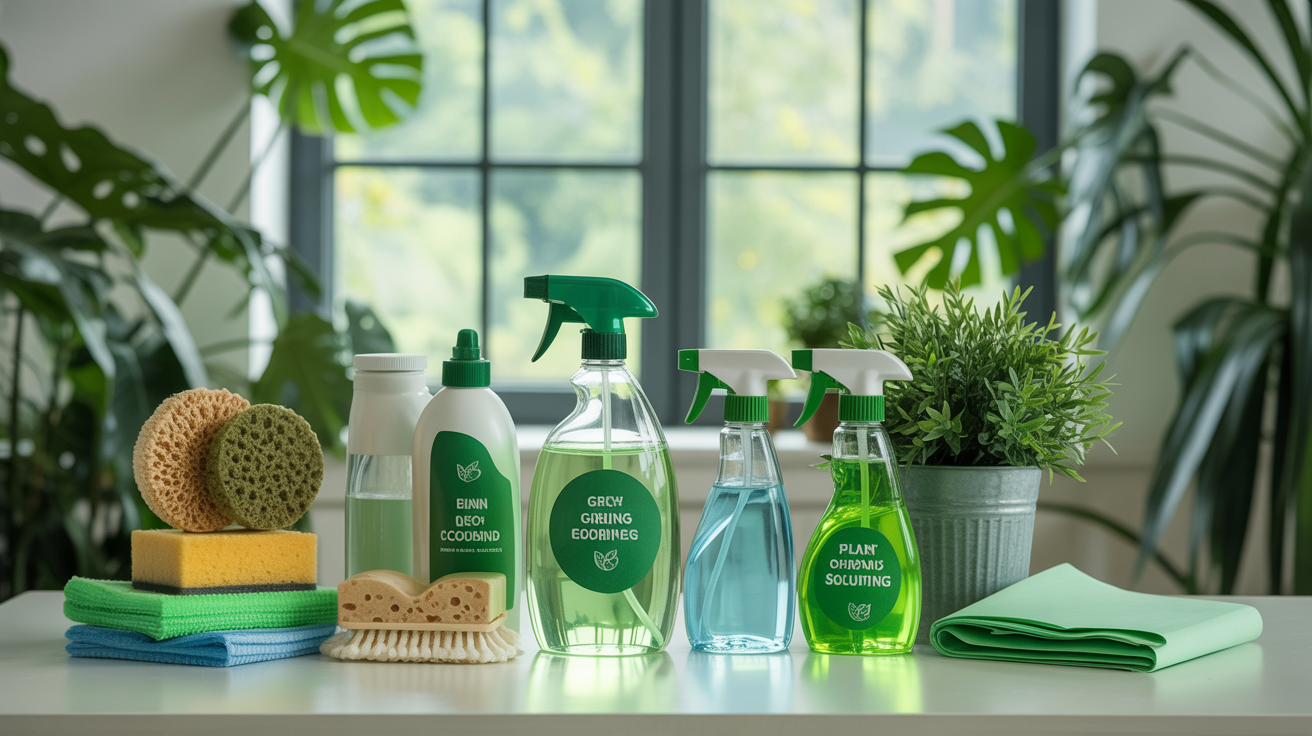
Childcare cleaning is a regulated discipline, not general office cleaning. Here is how Victorian centre directors and approved providers can align their cleaning program with the NQS, the Education and Care Services National Regulations and sound infection control practice.
Why childcare cleaning is a different discipline entirely
If you manage an early learning service in Melbourne, you already know that the cleaning contract sitting on your desk is not the same product an accounting firm down the road buys. An office is cleaned so it looks presentable and smells fresh. A childcare centre is cleaned because children under five put their hands on every surface, then put those hands in their mouths, and because your service carries a legal duty to protect their health and safety. The outcome you are purchasing is not appearance. It is risk reduction, evidenced and documented.
That difference shows up everywhere once you look for it. Children crawl on the floor, so floors are a contact surface rather than a background. Mouthed toys are effectively cutlery. Nappy change tables are clinical zones. Sandpit edges, water troughs, cot rails, high chair straps and the underside of tables all matter in a way they simply do not in a commercial fitout. Meanwhile the chemicals used to clean these surfaces are being breathed in by developing lungs at a body weight a fraction of an adult's.
So childcare centre cleaning demands a different method statement, a different product set, a different schedule and a different standard of proof. When a cleaning company quotes your centre using the same scope they would use for a warehouse office, that is the first and clearest signal they have not done this work before. It is also why childcare cleaning Melbourne services are priced and specified separately from general commercial cleaning, and why the cheapest line item on a comparison table is very rarely the cheapest outcome once a gastro outbreak closes a room for a week.
The regulatory frame you are actually being assessed against
Three reference points shape what your cleaning program needs to deliver, and it is worth being precise about each because they do different jobs.
The National Quality Standard is the assessment and rating framework your service is measured against. Quality Area 2 — Children's Health and Safety — is the one that speaks directly to hygiene practice, healthy eating, safe sleep, incident prevention and the management of illness. Assessors are not looking for a spotless foyer. They are looking for evidence that your service has systems in place, that educators understand them, and that those systems are consistently applied. A cleaning contractor cannot achieve a rating for you, but a weak cleaning program will absolutely surface as a gap in the conversation.
The Education and Care Services National Regulations sit underneath the National Law and set the enforceable operational requirements — the obligations around hygienic practice, safe and clean premises, nappy change facilities, food safety, and the policies and procedures your service must hold and follow. Your cleaning arrangements are one of the ways you demonstrate compliance with those obligations in practice rather than on paper.
The National Health and Medical Research Council's Staying Healthy guidance is the practical infection control reference the sector leans on. It is not a regulation, but it is the accepted plain-language source for how illness spreads in early childhood settings and what actually interrupts that spread: hand hygiene, exclusion of unwell children and staff, effective cleaning, appropriate use of gloves, and the distinction between cleaning and disinfecting. Any cleaning company working in early learning centre cleaning should be able to talk fluently about those principles without prompting.
Put simply: the Regulations tell you what you must do, the NQS is how you are judged on doing it, and Staying Healthy explains why the method works. Your cleaner should understand all three well enough to be useful in an assessment conversation.
Cleaning versus disinfecting — the distinction that trips services up
A recurring source of confusion, and one that shows up in poor scopes, is treating cleaning and disinfecting as interchangeable. They are not, and the sequence matters.
Cleaning is the physical removal of soil, organic matter and a large share of the microorganisms living in it, using detergent and mechanical action — the wiping, agitating and rinsing. For most surfaces in a childcare centre, thorough cleaning with detergent and warm water, followed by proper drying, is the workhorse that does the heavy lifting. Disinfecting is a separate step that reduces remaining microorganisms on a surface that is already clean. Applied to a dirty surface, disinfectant is largely wasted — organic matter deactivates it — which means a contractor who sprays disinfectant over soiled surfaces is performing hygiene theatre rather than infection control.
The second half of the distinction is contact time. Disinfectants only work if the surface stays visibly wet for the period the manufacturer specifies. Spray-and-immediately-wipe achieves very little. When you interview a childcare cleaning company, ask them how long their disinfectant needs to dwell on a nappy change surface. If they cannot answer without reading the label, they are not applying the product to its instructions.
Drying matters too. Surfaces left damp support microbial growth and re-soiling. This is one of several reasons childcare cleaning is scheduled when the rooms are empty rather than squeezed between activities.
Low-tox and child-safe product selection — and what to avoid
Product choice in an early learning setting is a health decision, not a preference. Children spend long days in these rooms, sit and crawl on cleaned floors, mouth cleaned objects, and have smaller airways and higher breathing rates relative to body size than the adults specifying the chemicals. Residue and volatile organic compounds that an adult would never notice in an office are a genuine consideration here.
Low-tox cleaning products, chosen properly, deliver the same hygiene outcome with a smaller chemical burden. The practical principles are straightforward. Use detergent and water as the default for routine surfaces, and reserve disinfectant for the surfaces and events that genuinely warrant it — nappy change areas, toilets, blood or bodily fluid spills, and outbreak response. Choose products with low or no fragrance, because fragrance is a common irritant and a masking agent for poor cleaning. Avoid heavily perfumed all-purpose sprays, and avoid the habit of using disinfectant everywhere as a substitute for method.
Things to steer well clear of in occupied childcare spaces: strong solvent-based products, ammonia-heavy glass cleaners used near children, and — critically — any mixing of bleach-based products with acidic or ammonia-containing cleaners, which produces hazardous gases. Bleach solutions, where used, need correct dilution and fresh preparation; old, badly stored solutions lose efficacy and give false confidence. Every product on site needs a current Safety Data Sheet available, and all chemicals must be stored securely and completely out of children's reach — an unlocked cleaning trolley left in a room is both a hazard and an obvious finding.
For our childcare clients, Sparkle Office builds the product schedule around low-tox, fragrance-free options wherever they achieve the required result, with the SDS folder kept on site and the disinfectant reserved for where it earns its place. If you want that schedule reviewed against your current arrangements, call us on 03 8610 6350 for a free quote.
Nappy change, toilets and bathroom protocol
Nappy change areas are the highest-consequence zone in the building, and they are where a cleaning company's competence becomes visible fastest. The routine between changes belongs to educators — that is a staff practice question, and it follows the service's own procedure. What the contract cleaner owns is the end-of-day reset: the change table surface and its underside, the steps, the rails, the bin and the bin lid, the tap and sink, the wall behind and beside the change area where splashes land, and the floor beneath it.
The order of operations is the point. Clean with detergent first, remove the soil, then apply disinfectant to the now-clean surface and give it the contact time the label demands. Nappy bins need the lid, the pedal and the rim cleaned, not just a liner swap. The rubbish bin lid is one of the most touched and least cleaned objects in a childcare centre.
Children's toilets and hand basins deserve the same discipline, with particular attention to the surfaces at child height that adults never see because they are looking at eye level — the underside of the seat, the flush button, the door handles and push plates at knee height, the tap handles, the soap dispenser and the bottom of the mirror. Colour-coded cloths and mops kept strictly to their zone are non-negotiable here; a mop that travels from the toilet floor to the playroom floor has undone the whole exercise. So has a cloth reused across a nappy area and a table. Single-use or laundered-per-zone cloths are the standard to insist on in your scope.
Toys, mats and soft furnishings
Toys are the one category where general commercial cleaners consistently under-deliver, because nothing in an office prepares them for it. Hard plastic toys that go in mouths need washing in warm water with detergent, rinsing, and thorough drying — and a rotation system so that mouthed toys are pulled out of circulation and cleaned rather than staying in the tub all week. Many centres run this as an educator task during the day, with the contract cleaner handling the deeper cycle. Either model works, provided the boundary is written down and someone owns it.
Soft toys and dress-ups need laundering on a defined cycle, and immediately after a child has been unwell. Cot linen, sleep mats and bedding follow the same logic: mats wiped down and dried between users, linen laundered per child, never shared unwashed. Play mats and foam flooring hide soil in the seams and underneath, so they need lifting rather than wiping around.
Carpets, rugs and upholstered corners are the slow accumulators. Children spend their day at floor level, so carpet in an early learning room is closer to a play surface than a floor covering. A periodic deep clean — scheduled, documented, and timed so the carpet is genuinely dry before children return — belongs in your annual program alongside the daily scope. Damp carpet is worse than the soil you removed.
Kitchen and food-prep hygiene
If your centre prepares or reheats food on site, the kitchen carries food safety obligations that sit alongside the education and care requirements. The cleaning implications are familiar to anyone from hospitality but often missing from a childcare cleaning scope written by a generalist.
Food contact surfaces — benches, boards, prep tables — need cleaning with detergent then sanitising with a product suitable for food contact surfaces, applied to its instructions. Sinks, taps, splashbacks, the fridge handles and seals, oven and microwave interiors, and the bin area all need a defined frequency. Bottle prep areas in the babies' room deserve specific attention, as do high chairs — including the straps, the crevices around the tray and the underside where food collects out of sight.
A clear boundary between kitchen equipment and general cleaning equipment matters as much here as it does in the bathrooms. Separate colour-coded cloths, a separate mop, and a written scope that names who cleans what and when. Ambiguity between kitchen staff and contract cleaners is where surfaces quietly go unclaimed for months.
Timing: why childcare cleaning belongs after hours
There is a straightforward reason serious childcare cleaning happens after the last child leaves, and it is worth stating plainly to anyone in your organisation pushing for a mid-day service to save money.
Cleaning while children are present means chemicals are aerosolised in occupied rooms, wet floors become a slip hazard for people who are not steady on their feet yet, equipment and trolleys carrying chemicals sit in spaces where children roam, and cleaners without a Working with Children Check would be moving through areas where they have no business being. Even with low-tox products, an after-hours schedule gives surfaces time to dry properly and any residual product time to off-gas before the room is occupied again — which is exactly the outcome you want from a product that has done its job and then left.
After-hours also means the work gets done properly. Rooms can be cleared, mats lifted, furniture moved and floors done end-to-end without working around a story circle. Deeper periodic work — carpets, windows, high dusting, vents — can be scheduled with enough drying time before the doors open. For most Melbourne centres, an evening service after close, with a documented periodic program layered on top, is the arrangement that satisfies both the practical and the compliance side of the question.
What to look for when hiring a childcare cleaning company
Most centre directors are comparing quotes with no easy way to tell a competent childcare cleaning provider from a general commercial cleaner who has typed the word 'childcare' into a proposal. A short checklist separates them quickly.
Working with Children Checks for every person who will set foot on your site, including supervisors, casual fill-ins and the owner. Ask to see them, and ask what happens when someone calls in sick — an unchecked replacement cleaner turning up at 6pm is a real and common failure. National police checks as standard practice. Current public liability insurance and workers compensation, with certificates of currency you can actually hold.
Then the operational evidence. A documented, childcare-specific method statement — not a generic office scope with 'toys' pencilled in. Colour-coded equipment with a stated zone discipline. A product list you can review, with Safety Data Sheets held on site and chemicals stored securely. Training that covers infection control basics, not just how to run a vacuum. A clear scope that names every zone and frequency, so nothing sits in the gap between educators and cleaners. And sign-off records or a task log, because your evidence at assessment time is only as good as your documentation.
Finally, staff continuity. A rotating cast of cleaners who have never seen your floor plan will never clean it well. Consistency of personnel is a genuine quality indicator in early learning centre cleaning, and it is a fair question to ask before you sign.
Sparkle Office provides childcare cleaning across Melbourne for early learning centres, kindergartens and long day care services — WWCC-cleared teams, low-tox product schedules, documented method and after-hours servicing. To talk it through or arrange a free quote, call 03 8610 6350.
Frequently asked questions
How often should a childcare centre be professionally cleaned? Daily after-hours cleaning is the baseline for any operating early learning service, covering all rooms, bathrooms, nappy areas, kitchen and high-touch surfaces. Layer a periodic program over it — carpets and soft flooring, high dusting, windows, vents and deep kitchen work — on a defined schedule you can show an assessor.
Does a contract cleaner replace what educators do during the day? No. Educators handle in-the-moment hygiene: hand washing, nappy change routines, wiping tables between meals, dealing with spills as they happen. The contract cleaner delivers the systematic daily reset and the periodic deep work. The two must be written down as one scope so nothing falls between them.
Are low-tox products actually as effective? For the great majority of surfaces, detergent and water with proper mechanical action and drying is the effective method — and that is what the infection control guidance points to. Disinfectant matters for nappy areas, toilets, bodily fluid spills and outbreak response, applied to a clean surface with correct contact time. Low-tox does not mean weak; it means not reaching for a harsh chemical where it adds risk without adding a hygiene outcome.
Do all cleaners need a Working with Children Check? Anyone attending your service needs to satisfy your service's requirements, and your provider should have WWCC clearance across the whole team as a matter of policy — including replacements and supervisors. Ask how the provider handles cover, not just their regular roster.
What should be in a childcare cleaning scope? Every zone named, every task listed against a frequency, the products specified, the equipment colour-coding stated, the responsibility boundary with educators defined, and the record-keeping described. If your current scope does not do those six things, it is not a childcare scope.
For a scope review or a free quote for your Melbourne centre, call Sparkle Office on 03 8610 6350.
Ready for a Spotless Workspace?
At Sparkle Office, we deliver professional cleaning results across Melbourne CBD, South Melbourne, Fitzroy, Richmond, Carlton, Brunswick, and 20+ surrounding suburbs. Our 50+ trained cleaners use eco-friendly products safe for your staff and the environment.
Get Your Free Quote