
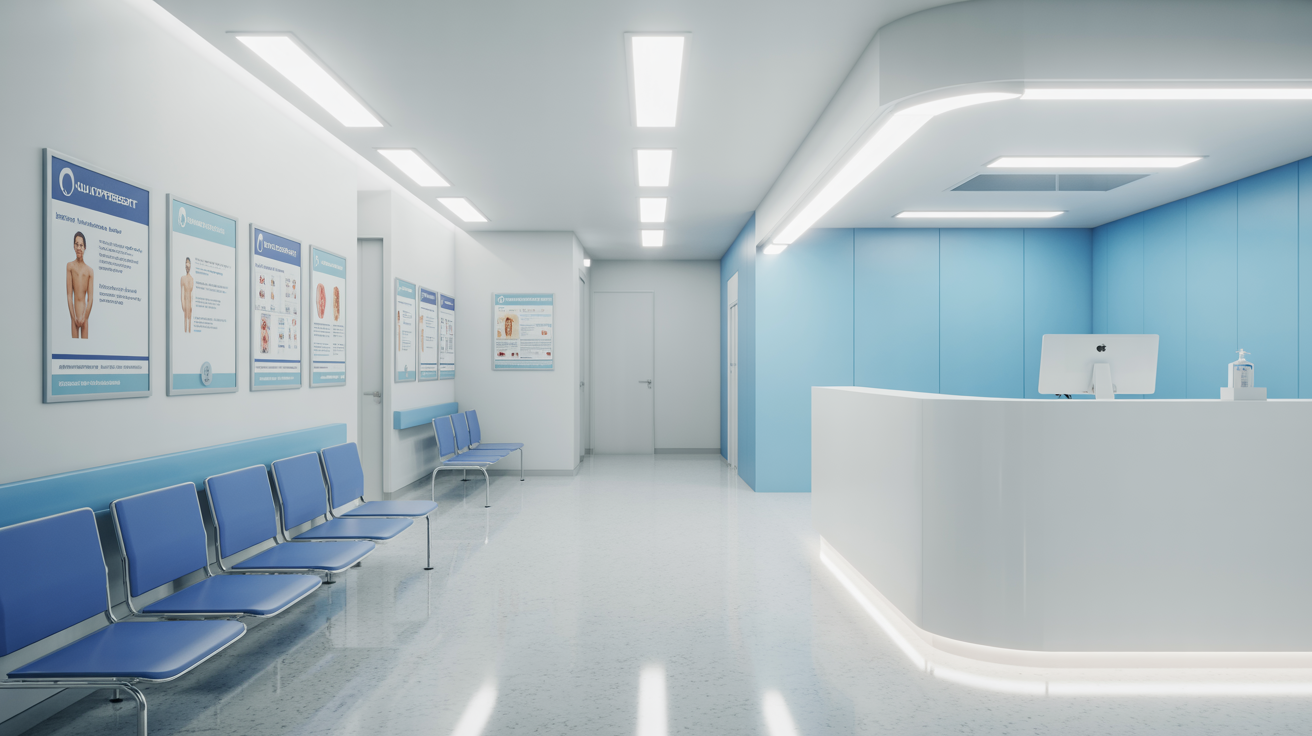
Medical centre cleaning in Melbourne is governed by strict infection control expectations under NSQHS Standards, AHPRA and RACGP guidance. This 2026 guide explains TGA-listed disinfectants, colour-coded systems, clinical-zone protocols and how to choose a compliant healthcare cleaning partner for your Victorian practice.
Why Medical Cleaning Is a Different Discipline
Cleaning a medical centre is not the same job as cleaning a typical office, and treating the two as interchangeable is one of the most common mistakes Victorian practices make. In a standard workplace, the goal is a tidy, presentable space. In a healthcare setting, cleaning is a frontline infection-control measure that directly affects patient safety, staff wellbeing and your practice's accreditation status.
Medical centres concentrate sick and vulnerable people in shared spaces. Reception counters, waiting-room chairs, consult-room beds, EFTPOS terminals and door handles are touched by dozens or hundreds of people each day, many of them unwell. Pathogens such as influenza, norovirus, gastro and multi-resistant organisms can survive on hard surfaces for hours or days. Effective healthcare cleaning interrupts that chain of transmission.
This is why proper medical centre cleaning in Melbourne relies on trained operators, documented procedures, hospital-grade products and a systematic approach to high-touch and clinical surfaces. It is a discipline in its own right, and the rest of this guide explains the standards and practices that underpin it.
The Regulatory Landscape: NSQHS, AHPRA, RACGP and the TGA
Several frameworks shape how a compliant medical practice must approach cleaning and infection control in Victoria. Understanding them helps practice managers brief their cleaning provider correctly.
The National Safety and Quality Health Service (NSQHS) Standards are the central reference point. Standard 3, Preventing and Controlling Infections, sets out expectations for a clean and hygienic environment, effective cleaning and disinfection of surfaces and equipment, and systems that minimise the risk of healthcare-associated infection. Accredited general practices and many medical centres are assessed against these NSQHS Standards, and environmental cleaning is a visible, auditable part of that assessment.
AHPRA, the Australian Health Practitioner Regulation Agency, registers practitioners and, alongside the relevant National Boards, expects registered health professionals to maintain safe clinical environments. While AHPRA does not publish a cleaning checklist, practising safely and hygienically is a clear professional expectation, and infection-control failures can become a regulatory concern.
The RACGP (Royal Australian College of General Practitioners) publishes detailed infection prevention and control guidance for general practice, covering environmental cleaning, surface disinfection, spills management and staff responsibilities. Many Melbourne practices use RACGP guidance as their day-to-day operational benchmark.
Finally, the Therapeutic Goods Administration (TGA) regulates disinfectants in Australia. Hospital-grade and clinical disinfectants used in healthcare settings should be TGA-listed for that purpose. Using TGA-listed disinfectants, applied at the correct dilution and contact time, is fundamental to defensible infection control.
TGA-Listed Disinfectants and Correct Use
Choosing the right chemistry is only half the task; using it correctly is the other half. A surface that is sprayed and immediately wiped has often not had enough contact time for the disinfectant to work. This is one of the most frequent gaps we see when reviewing a new client's previous cleaning arrangements.
In a healthcare environment, products should be TGA-listed hospital-grade disinfectants appropriate to the surface and risk level. Operators need to understand the difference between cleaning, which removes soil and reduces the bioburden, and disinfection, which reduces pathogens on an already-clean surface. Disinfecting over visible soil is far less effective, so the sequence almost always runs clean first, then disinfect.
Key points for compliant disinfectant use in a medical centre include following the manufacturer's stated dilution and contact (dwell) time, never mixing incompatible chemicals, storing products safely and securely, and keeping current Safety Data Sheets accessible on site. A professional medical office cleaning team will train staff on these details and document the products in use, which also supports your NSQHS evidence at accreditation time.
Colour-Coded Cloths and Zone Systems
Colour-coded cleaning is a simple but powerful method for preventing cross-contamination, and it is an expectation in serious healthcare cleaning. The principle is that different coloured cloths, mops and equipment are dedicated to different zones, so a cloth used in a toilet never travels to a consult-room bench.
While schemes can vary, a widely used Australian convention assigns red to toilets and washroom floors, yellow to clinical washbasins and bathroom surfaces, blue to general low-risk areas such as offices and reception dusting, and green to kitchen and tea-room areas. The exact palette matters less than having a clear, written, consistently applied system that every operator on your site understands.
Colour coding extends beyond cloths to mop heads, buckets and even spray bottles. Microfibre is favoured because it traps soil and microbes effectively and can be laundered to a high standard between uses. A reputable medical centre cleaning provider in Melbourne will arrive with a defined colour-coded system, launder textiles properly, and be able to explain exactly how cross-contamination between zones is prevented.
High-Touch Surfaces and Clinical-Zone Protocols
Within a medical centre, not all surfaces carry the same risk, and cleaning frequency should reflect that. High-touch points and clinical zones demand the most attention.
High-touch surfaces are the items many hands contact throughout the day: door handles and push plates, light switches, reception counters, pens and clipboards, EFTPOS terminals, chair arms in the waiting room, lift buttons, taps and shared keyboards. These should be cleaned and disinfected frequently, often daily or more, because they are prime vehicles for transmission.
Clinical zones, including consult rooms, treatment and procedure rooms, and dressing or wound-care areas, require a higher standard again. Examination beds and vinyl surfaces should be disinfected between patients by clinical staff, with environmental cleaners maintaining floors, basins, benches and waste at the agreed frequency. Particular care applies to surfaces near sharps and to any area where blood or body-fluid exposure is possible.
Good healthcare cleaning also plans for spills. A blood or body-fluid spill must be managed promptly using the correct procedure and products, with the cleaner trained to contain, clean and disinfect the area safely while wearing appropriate personal protective equipment. Documented protocols for these scenarios are a hallmark of a genuinely medical-grade provider.
Waiting Rooms, Reception and Shared Areas
The waiting room and reception are where infection-control standards are most visible to patients, and where a large share of casual contact occurs. These spaces deserve deliberate attention rather than a quick tidy at the end of the day.
Seating is a priority. Wipeable, non-porous chairs should be disinfected regularly, and any fabric upholstery needs an appropriate cleaning regime because soft surfaces are harder to decontaminate. Toys, magazines and shared touch screens have become recognised risk points; many Melbourne practices have reduced or removed shared items, and those that remain should be cleanable and cleaned often.
Reception desks, counters, pens, EFTPOS machines and the back-of-house admin area all need consistent attention, as staff move between patient-facing surfaces and their own workstations. Floors should be cleaned with appropriately zoned equipment, and bathrooms maintained to a high standard with reliable hand-hygiene supplies, because accessible soap and sanitiser support the whole infection-control effort. A tidy, visibly clean waiting room also reassures patients and reflects well on the practice's professionalism.
Clinical and Sharps Waste Handling Basics
Medical centres generate waste streams that ordinary offices do not, and handling them correctly is both a safety and a compliance issue. Clear segregation at the point of generation is the foundation.
General waste, clinical (biohazard) waste and sharps must be separated into the correct, clearly labelled containers. Clinical waste typically goes into yellow bags or bins, while sharps such as needles and blades go into rigid, puncture-resistant yellow sharps containers that are never overfilled and are sealed when they reach the fill line. These streams are collected and treated by licensed clinical-waste contractors, not placed in general rubbish.
It is important to be clear about responsibilities. Filling and sealing sharps containers is generally a clinical-staff task, while environmental cleaners manage general waste, replace bin liners, keep bin areas clean and ensure clinical-waste bins are not contaminated externally. A competent medical office cleaning provider understands these boundaries, trains its operators on safe waste handling and PPE, and never improvises with clinical or sharps waste. If you are unsure how your current arrangements stack up, our team is happy to talk it through, on 03 8610 6350.
How to Choose a Medical Cleaning Company in Melbourne
Not every commercial cleaner is equipped for healthcare work. When you are hiring for a medical centre, the right questions quickly separate a genuine specialist from a general contractor.
Look for demonstrated healthcare experience and an understanding of the NSQHS Standards and RACGP infection-control expectations. Ask whether operators are trained specifically in medical cleaning, including colour-coded systems, high-touch protocols, spills management and safe waste handling. Confirm that the products used are TGA-listed hospital-grade disinfectants and that the provider can supply Safety Data Sheets.
Practical assurances matter too: appropriate insurance, police-checked and reliable staff, a documented scope and cleaning schedule, and a willingness to provide records that support your accreditation evidence. Consistency of personnel is valuable, because a stable team that knows your layout and risk points performs better than a rotating cast of unfamiliar cleaners.
Sparkle Office provides specialist medical office cleaning across Melbourne, with trained operators, colour-coded systems, hospital-grade TGA-listed disinfectants and documented procedures aligned to healthcare expectations. If you would like a tailored walk-through of your practice and a no-obligation quote, call our team on 03 8610 6350 and we will arrange a convenient time.
Frequently Asked Questions
Is medical centre cleaning a legal requirement in Victoria? There is no single cleaning law, but accredited practices are assessed against the NSQHS Standards, and AHPRA-registered practitioners are expected to maintain safe, hygienic clinical environments. RACGP guidance sets practical benchmarks. In practice, robust environmental cleaning is essential to meet these expectations and pass accreditation.
What disinfectants should a medical centre use? Healthcare settings should use TGA-listed hospital-grade disinfectants suited to the surface and risk level, applied at the correct dilution and contact time. Cleaning to remove soil should precede disinfection, and Safety Data Sheets should be kept on site.
How often should high-touch surfaces be cleaned? High-touch points such as door handles, counters and EFTPOS terminals should be cleaned and disinfected frequently, commonly daily or more often in busy practices, while clinical surfaces like examination beds are disinfected between patients by clinical staff.
Can a regular office cleaner do medical cleaning? Generally no. Medical cleaning requires specific training in infection control, colour-coded systems, clinical-zone protocols and waste handling. Always choose a provider with genuine healthcare cleaning experience.
How do I get started with Sparkle Office? Call us on 03 8610 6350 for a free, no-obligation quote and a site walk-through tailored to your Melbourne medical centre.
Ready for a Spotless Workspace?
At Sparkle Office, we deliver professional cleaning results across Melbourne CBD, South Melbourne, Fitzroy, Richmond, Carlton, Brunswick, and 20+ surrounding suburbs. Our 50+ trained cleaners use eco-friendly products safe for your staff and the environment.
Get Your Free Quote