
A practice manager's side-by-side guide to how medical and dental cleaning compliance differ and overlap in Victoria, plus how to get your clinic's cleaning ready for an accreditation assessment or inspection.
Why cleaning gets assessed at accreditation
If you manage a Victorian medical or dental practice, you already know that accreditation is not a paperwork formality. Environmental cleaning sits squarely inside what an assessor looks at, because a clean, well-maintained clinical environment is one of the most visible signs that infection control is being taken seriously day to day. For accredited general practices, the National Safety and Quality Health Service (NSQHS) Standards frame the expectations, and RACGP standards shape what a GP clinic is measured against. Dental practices operate under AHPRA and Dental Board expectations, supported by ADA guidance and NHMRC infection-control principles. The bodies and language differ, but the underlying question an assessor asks is the same: can you show that your premises are cleaned to a consistent, documented, healthcare-grade standard? This post is written for the people who answer that question, the practice managers, dental practice owners, GP clinic managers and accreditation coordinators who hire and oversee cleaners. Rather than re-explaining any single framework from the ground up, we focus on how medical and dental cleaning compliance compare, where they overlap, where they diverge, and how to get your cleaning ready before an assessor or inspector walks through the door. If you want the deeper single-discipline explainers, we cover them separately in our medical centre cleaning compliance guide and our dental practice cleaning guide, and this comparison sits alongside both.
The shared foundation both must meet
Before the differences, it helps to name what medical and dental cleaning have in common, because most of your compliance effort lives here. Both disciplines expect the use of TGA-listed hospital-grade disinfectants, applied correctly: surfaces are cleaned first to remove soil, then disinfected, and the product is left for its full label contact time rather than wiped straight off. Both rely on a colour-coded cleaning system so that cloths and equipment used in a clinical or bathroom zone are never carried into a consult room or tea point, reducing cross-contamination. Both expect cleaning that supports hand hygiene, keeping sinks, soap and sanitiser stations stocked, clean and functional. And both expect documented procedures, a written cleaning schedule that says what is cleaned, how often, with which product, so the work is repeatable and auditable rather than left to memory. When we talk about medical cleaning compliance Melbourne practices need, or the standards expected for dental practice cleaning, this shared foundation is the part an assessor will recognise instantly in either setting. Get it right once and most of the discipline-specific requirements become refinements rather than separate systems.
Where medical cleaning is different
Medical general practice has its own rhythm, and cleaning has to match it. A GP clinic typically sees broad patient throughput across a busy day, which means high-touch points in the waiting room and reception, door handles, chairs, EFTPOS terminals, pens and check-in screens, need frequent attention, not just an end-of-day wipe. Consult rooms carry their own load: examination couches and the surfaces around them should be cleaned and disinfected between patients, and the couch paper and linen managed so nothing is reused across patients. Because a general practice deals with a wide range of presentations, spills and bodily-fluid management matters, and cleaners supporting the clinic need to understand the difference between a routine surface clean and the response to a blood or bodily-fluid spill. Waiting areas, shared toilets and treatment rooms each have different risk profiles, and a compliant medical clean reflects that graded approach rather than treating every room the same. The volume and variety of medical throughput is really what sets its cleaning apart from a smaller, more contained dental surgery.
Where dental cleaning is different
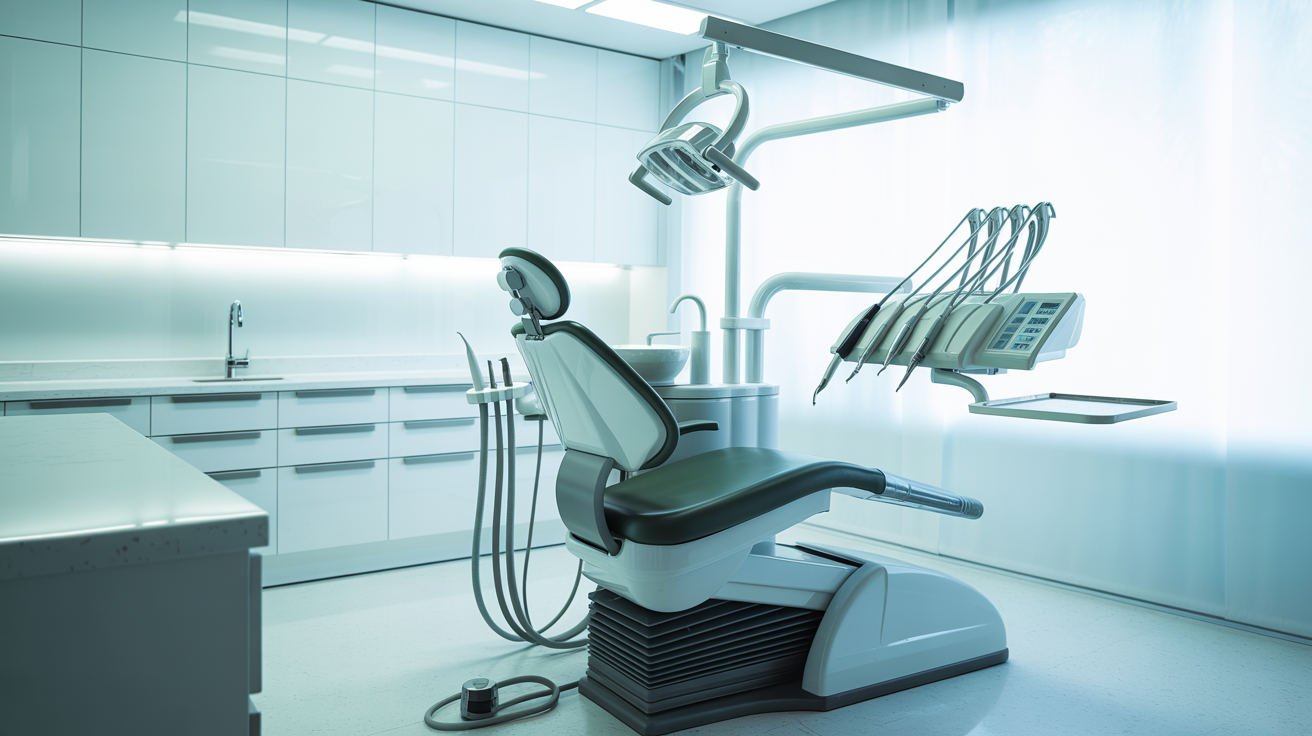
Dental practices concentrate risk into the surgery, or operatory, and the cleaning picture changes accordingly. Chairside surfaces, the dental chair itself, bracket tables, light handles, control panels and the area around the spittoon see repeated contact through procedures and need disciplined turnover between patients. Dentistry also operates in a higher-aerosol context than a typical GP consult, because drilling and scaling generate spray that can settle on nearby surfaces, so the surfaces a cleaner is responsible for, and the frequency, reflect that. The single most important dental distinction, though, is the boundary around the reprocessing or steri room. That space, where instruments are cleaned, packaged and sterilised, has strict rules about who does what, and a general cleaner does not reprocess instruments or handle the sterilisation workflow. Understanding where the cleaner's remit stops and clinical responsibility begins is central to compliant dental practice cleaning, and it is exactly the kind of boundary an assessor will probe.
The boundary line: cleaner versus clinical staff
This deserves its own section because blurring it is one of the fastest ways to fail an assessment or, worse, create a real safety incident. A cleaning contractor's job is environmental cleaning: floors, general and clinical surfaces within their defined scope, bathrooms, waiting areas, bins, and high-touch points, all to a documented standard. What a cleaner must never do is cross into tasks reserved for trained clinical staff. Instrument reprocessing and sterilisation stay with clinical staff. Filling, sealing and final handling of sharps containers is a clinical responsibility, and a cleaner should only ever manage them within a clearly agreed, trained boundary, never improvise. The reprocessing room in a dental practice, and any equivalent clinical clean-up in a medical setting, has a line that cleaners do not step over. A good provider does not just accept this boundary, they document it, so both the practice and the assessor can see exactly which tasks sit with cleaning and which sit with the clinical team. Clarity here protects everyone.
Documentation and evidence you need for assessment
Assessors and inspectors deal in evidence, and cleaning is easy to evidence if you have set it up well. At a minimum, a well-prepared practice can produce a written cleaning schedule showing rooms, tasks, frequency and responsibility; Safety Data Sheets (SDS) held on site for every chemical in use; and a product register that lets you point to the TGA-listed hospital-grade disinfectants you rely on, ideally with their ARTG listing so their status is verifiable. You should also be able to show staff training records for the people doing the cleaning, and a clearly defined colour-coding system, whether that is a wall chart, a laminated guide, or both. The goal is that if an assessor asks how a particular room is cleaned, with what, and how often, you can answer from documents rather than memory. A cleaning provider experienced in healthcare should hand you most of this proactively rather than leaving your accreditation coordinator to assemble it under pressure.
A practical pre-accreditation cleaning checklist
In the weeks before an assessment, it pays to walk the premises with a practice-manager's eye. Start at the front: is the waiting room genuinely clean, are high-touch points visibly maintained, are the toilets stocked and spotless? Move into consult rooms and surgeries and check that couches, chairs and chairside surfaces are being turned over between patients, and that there is no visible dust on ledges, skirtings or equipment tops. Confirm your colour-coded cloths and equipment are actually in use and stored separately, not muddled in one bucket. Check that hand-hygiene stations are stocked and working. Then turn to the paperwork: is the cleaning schedule current and matching what actually happens, are all SDS on site and up to date, can you point to ARTG numbers for your disinfectants, and are training records for cleaning staff filed and findable? Finally, confirm the cleaner-versus-clinical boundary is written down and understood on both sides. If any of these has a gap, the time to close it is now, not on assessment morning. A cleaning provider who knows healthcare can run this walkthrough with you.
How to choose a compliant medical or dental cleaning provider
Not every commercial cleaner is set up for clinical work, and choosing well removes a lot of accreditation stress. Look for genuine healthcare experience, a provider who has cleaned medical centres and dental surgeries before and understands the language of NSQHS, RACGP and infection control. Ask whether operators are trained specifically for clinical environments, including colour-coding, clean-then-disinfect with correct contact times, and spill response. Confirm the practical safeguards: appropriate insurance, current police checks for staff working in your premises, SDS supplied for every product, and references from other medical or dental clients you can actually call. A provider who can talk fluently about TGA-listed disinfectants, documentation and the cleaner-versus-clinical boundary is one who will make your next assessment easier, not harder. If a prospective cleaner cannot speak to any of this, treat that as your answer.
Frequently asked questions
Does the cleaner handle instrument sterilisation? No. Instrument reprocessing and sterilisation are clinical tasks for trained staff; the cleaner handles environmental cleaning within a defined scope. Do medical and dental practices need different disinfectants? Both should use TGA-listed hospital-grade disinfectants used correctly with full contact time; the products can be similar, but the surfaces, frequencies and risk contexts differ. Who assesses cleaning at accreditation? For accredited general practices, cleaning sits within the NSQHS Standards and RACGP framework; dental practices work to AHPRA and Dental Board expectations supported by ADA and NHMRC guidance. Can one provider clean both a medical and a dental practice? Yes, provided they understand the differences outlined above and document the boundaries clearly. What is the single most common gap? Missing or outdated documentation, a schedule, SDS or training records that do not match what actually happens on the floor.
Ready your practice with Sparkle Office
Sparkle Office provides healthcare-grade cleaning for Melbourne medical and dental practices, built around the compliance realities this guide describes. Whether you need reliable medical office cleaning for a busy GP clinic or specialised dental office cleaning that respects the surgery and reprocessing boundaries, our trained operators, documented procedures and TGA-listed hospital-grade disinfectants are designed to make your next accreditation assessment straightforward. For the deeper single-discipline detail, our medical centre cleaning compliance guide and dental practice cleaning guide sit alongside this comparison. To talk through your clinic's needs or to book a walkthrough before your assessment, call Sparkle Office for a free quote on 03 8610 6350.
Ready for a Spotless Workspace?
At Sparkle Office, we deliver professional cleaning results across Melbourne CBD, South Melbourne, Fitzroy, Richmond, Carlton, Brunswick, and 20+ surrounding suburbs. Our 50+ trained cleaners use eco-friendly products safe for your staff and the environment.
Get Your Free Quote